
-

- Find A Provider
-
Services
- Addiction Recovery
- Audiology
- Behavioral Health
- Cardiac Rehabilitation
- Cardiology
- Chiropractic Care
- Colon Cancer Screening
- Dermatology Services
- Diabetes Education
- ER & Urgent Care
- Eye Care
- Family Medicine
- Home Care
- Hospice
- Infusion Therapy
- Internal Medicine
- Laboratory
- Long Term Care Facility
- Men's Health
- Nutrition Services
- Orthopedics
- Pain Management
- Podiatry
- Radiology/Diagnostic Imaging
- Rehabilitation Services
- Respiratory Care
- Senior Care Unit
- Sleep Medicine
- Surgery
- Swing Bed/Transitional Care
- Urology
- Women's Health
- Patients & Visitors
- Facilities & Pharmacy
- About Us
-

Blood Donation: Safe, Simple, and Essential
December 23, 2025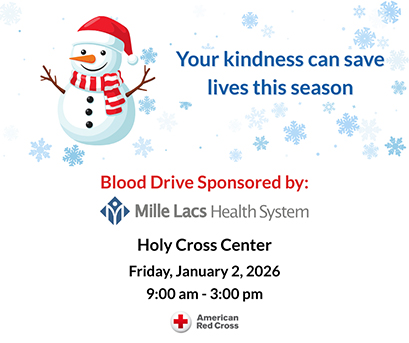
Blood donation is one of the simplest ways an individual can make a direct and lasting impact on the health of others. January is recognized as National Blood Donor Month, offering a timely reminder of how essential regular blood donation is throughout the year. A single donation can help up to three patients, supporting care for people facing surgery, trauma, cancer treatment, or chronic illness. Because donated red blood cells have a limited shelf life of about six weeks, the need for donors remains constant, even during winter months.
Many people are surprised by how straightforward the donation process is. From arrival to departure, most appointments take about an hour, with the actual blood draw lasting less than ten minutes. Donors complete a brief health history, have their temperature, blood pressure, pulse, and hemoglobin checked, and then relax while a sterile, single-use needle is used to collect about a pint of blood. Afterward, donors spend a few minutes enjoying refreshments while their body begins to replace lost fluids.
Safety is a priority at every step. All equipment is new and sterile, and each donor is screened carefully to ensure the process is safe for both the donor and the recipient. Most healthy adults are eligible to donate, including people with well-controlled chronic conditions such as diabetes or high blood pressure. Some individuals may be asked to wait temporarily due to low iron levels, recent illness, travel, or certain medications, but deferrals are often short-term rather than permanent.
Iron levels are an important part of blood donation, as iron helps red blood cells carry oxygen throughout the body. Before donating, hemoglobin is checked with a quick fingerstick. Maintaining iron stores can be supported by eating iron-rich foods such as lean meats, beans, poultry, and leafy greens, along with foods high in vitamin C to help absorption. Staying well hydrated before and after donation also helps donors feel their best.
After donating, most people can return to normal activities the same day, with a few simple precautions. Drinking extra fluids, avoiding heavy lifting or strenuous exercise for several hours, and keeping the bandage in place helps the body recover smoothly. Plasma volume is replaced within about a day, while red blood cells are fully replenished over several weeks.
Blood donation plays a vital role in rural health care systems by supporting both emergency readiness and routine patient care. Community members interested in donating locally will have an upcoming opportunity when the American Red Cross blood drive, sponsored by Mille Lacs Health System, is held on Friday, January 2, from 9 a.m. to 3 p.m. at the Holy Cross Center on the MLHS campus in Onamia. Appointments can be scheduled in advance through RedCrossBlood.org using the sponsor code “Mille Lacs,” or by calling 1-800-RED-CROSS.