
-

- Find A Provider
-
Services
- Addiction Recovery
- Audiology
- Behavioral Health
- Cardiac Rehabilitation
- Cardiology
- Chiropractic Care
- Colon Cancer Screening
- Dermatology Services
- Diabetes Education
- ER & Urgent Care
- Family Medicine
- Home Care
- Hospice
- Infusion Therapy
- Internal Medicine
- Laboratory
- Long Term Care Facility
- Men's Health
- Nutrition Services
- Orthopedics
- Pain Management
- Podiatry
- Radiology/Diagnostic Imaging
- Rehabilitation Services
- Respiratory Care
- Senior Care Unit
- Sleep Medicine
- Surgery
- Swing Bed/Transitional Care
- Urology
- Women's Health
- Patients & Visitors
- Facilities & Pharmacy
- About Us
-

Head Lice: Prevention, Detection, and Treatment
February 17, 2026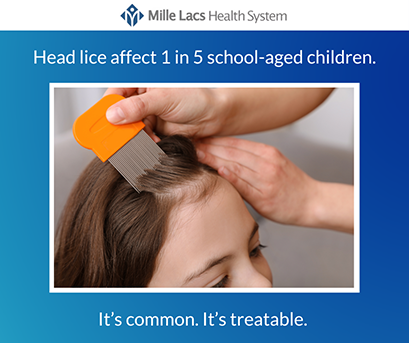
There’s one common grade school “bug” that has nothing to do with coughs or fevers. Head lice affect at least 1 in 5 school-aged children worldwide at some point, making them one of the most common childhood conditions. The CDC estimates between 6 – 12 million cases occur each year in the United States among children ages 3 to 11. Late summer, back-to-school season, and the months following holiday breaks are often busy times for lice simply because children are in closer contact.
Head lice are small insects that live on the human scalp and feed on blood several times a day. They do not jump or fly. Instead, they spread primarily through direct head-to-head contact. Girls tend to have a slightly higher incidence than boys, likely due to more frequent close contact during play and social interaction. Sharing personal items such as brushes, hats, headbands, helmets, or headphones can also contribute to spread. Pets do not carry head lice.
Understanding the lifecycle helps families know what to expect. Adult lice lay eggs, called nits, which are attached firmly to the hair shaft close to the scalp. These eggs hatch in about 8 to 10 days. The newly hatched lice, called nymphs, mature into adults in about 7 to 10 more days and can then begin laying eggs. Without treatment, this cycle continues. However, once lice fall off the human scalp, they usually die within one to two days because they require human blood to survive.
The most common symptom is persistent itching, especially behind the ears and along the neckline. The itching is caused by a reaction to lice bites. Some individuals may not notice symptoms right away, and itching can take several weeks to develop after the initial exposure.
To check for lice, examine the scalp under bright light. Part the hair in small sections and look closely near the scalp, particularly behind the ears and at the base of the neck. Adult lice are about the size of a sesame seed and move quickly. Nits appear as tiny oval specks attached to the hair shaft close to the scalp. Unlike dandruff, they cannot be easily brushed away.
If lice are found, visit your local pharmacy or consult your medical provider about appropriate treatment options. Over-the-counter and prescription treatments are available. Many products require a second application 7 to 10 days after the first treatment to eliminate newly hatched lice.
Manual removal with a fine-tooth lice comb remains a cornerstone of management. Wet combing - carefully combing damp, conditioned hair in small sections - can be effective even without medicated products when performed consistently over several days. The comb should be drawn slowly from the scalp to the end of the hair shaft. After each pass, rinse the comb in a bowl of water or wipe it on a paper towel to remove any lice or nits before running it through the hair again. This process should be repeated methodically throughout the entire scalp. Thorough, consistent combing helps remove both live lice and attached nits.
Household cleaning efforts should focus on items that had recent contact with the head. Wash bedding, clothing, hats, and towels in hot water and dry on high heat. Items that cannot be laundered can be sealed in a plastic bag for two weeks so that any lice present die naturally before reopening. Placing sealed items in a freezer for 48 hours can also help kill lice. Soak combs and brushes in hot water (at least 130°F) for ten minutes. Routine vacuuming of carpets, upholstered furniture, and vehicle seats is sufficient. A sticky lint roller can be helpful on cloth car seats and headrests to remove stray hairs that may have attached nits.
Prevention centers on reducing head-to-head contact and avoiding the sharing of personal items. Encourage children to keep long hair tied back during school and activities. Some families choose to use hair sprays or detanglers scented with tea tree oil, rosemary mint, or lemongrass to name a few, as lice may be less attracted to certain strong scents. These products can be considered a supportive measure but should not replace regular scalp checks.
Head lice can be inconvenient, but they do not spread disease and are not a sign of poor hygiene. In fact, lice are often able to attach more easily to clean hair than to oily or greasy hair, which can make it harder for them to grip. Early detection, prompt treatment, and simple cleaning steps can help families manage them quickly and confidently.