
-

- Find A Provider
-
Services
- Addiction Recovery
- Audiology
- Behavioral Health
- Cardiac Rehabilitation
- Cardiology
- Chiropractic Care
- Colon Cancer Screening
- Dermatology Services
- Diabetes Education
- ER & Urgent Care
- Eye Care
- Family Medicine
- Home Care
- Hospice
- Infusion Therapy
- Internal Medicine
- Laboratory
- Long Term Care Facility
- Men's Health
- Nutrition Services
- Orthopedics
- Pain Management
- Podiatry
- Radiology/Diagnostic Imaging
- Rehabilitation Services
- Respiratory Care
- Senior Care Unit
- Sleep Medicine
- Surgery
- Swing Bed/Transitional Care
- Urology
- Women's Health
- Patients & Visitors
- Facilities & Pharmacy
- About Us
-

Medicare Billing Issues Create Financial Strain for Rural Hospitals
March 26, 2026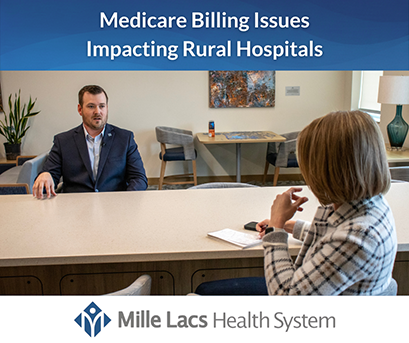
You may have recently seen Mille Lacs Health System (MLHS) in the news. Chief Executive Officer Andy Knutson has been speaking with outlets including MPR News, KARE 11, and regional newspapers to bring attention to a growing issue affecting rural hospitals.
At the center of the concern is a Medicare billing problem that is impacting small hospitals across Minnesota and beyond. A glitch in a federal billing system designed to prevent improper payments has led to provider enrollment errors, causing claims to be denied without clear explanation. As a result, hospitals are not receiving timely reimbursement for care that has already been provided.
At Mille Lacs Health System, the impact has been significant. Since January 1, approximately $2.5 million in Medicare reimbursements has been withheld. In addition, MLHS is still owed approximately $1 million from UCare following its closure in 2025. Combined, delayed and outstanding payments for insurers have reached approximately $3.5 million in 2026. Medicare represents about 60% of MLHS’s business, making timely reimbursement critical to daily operations.
This issue is not isolated. Many critical access hospitals using Method II billing are experiencing similar denials, despite having accurate and up-to-date enrollment information. Conversations with the Centers for Medicare & Medicaid Services (CMS) and National Government Services (NGS) indicate that enrollment data submitted by hospitals did not transfer correctly into the claims processing system, resulting in automatic denials.
Efforts to resolve the issue have been ongoing and intensive. MLHS staff are in frequent contact with Medicare representatives, often making multiple calls each day, but responses have been inconsistent, with varying guidance and no clear timeline for resolution. In some cases, as hospitals attempted to correct enrollment information as directed, providers were unexpectedly deactivated in the system without clear explanation.
Without a timely resolution, these payment delays are creating immediate pressure on the ability to sustain operations. Timely reimbursement is essential to continuing care in rural communities.
In response, MLHS senior leadership is actively working on multiple fronts. Senior team members are coordinating with financial institutions to address short-term cash needs, while also engaging with local, state, and national leaders to escalate the issue and advocate for a timely resolution.
For patients, it is important to understand that this issue is related to how hospitals are reimbursed, not the care being provided. Services remain available, and healthcare teams continue to focus on meeting the needs of the community and provide exceptional care as we always have.