
-

- Find A Provider
-
Services
- Addiction Recovery
- Audiology
- Behavioral Health
- Cardiac Rehabilitation
- Cardiology
- Chiropractic Care
- Colon Cancer Screening
- Dermatology Services
- Diabetes Education
- ER & Urgent Care
- Family Medicine
- Home Care
- Hospice
- Infusion Therapy
- Internal Medicine
- Laboratory
- Long Term Care Facility
- Men's Health
- Nutrition Services
- Orthopedics
- Pain Management
- Podiatry
- Radiology/Diagnostic Imaging
- Rehabilitation Services
- Respiratory Care
- Senior Care Unit
- Sleep Medicine
- Surgery
- Swing Bed/Transitional Care
- Urology
- Women's Health
- Patients & Visitors
- Facilities & Pharmacy
- About Us
-

Stroke Awareness Month: Recognizing the Signs and the Importance of Rapid Care
May 8, 2026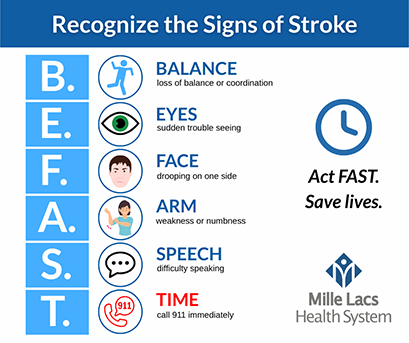
May is Stroke Awareness Month, a time dedicated to increasing public understanding of stroke symptoms and the importance of acting quickly. Stroke remains a leading cause of serious long-term disability and the fifth leading cause of death in the United States, according to the Centers for Disease Control and Prevention (CDC). Every minute during a stroke, brain cells are damaged, making early recognition and immediate medical care critical.
Mille Lacs Health System is proud to be designated as an Acute Stroke Ready Hospital through the Minnesota Department of Health (MDH) and is currently undergoing the process to re-designate this certification. This designation reflects the organization’s ability to quickly identify and evaluate stroke patients, begin time-sensitive treatment, and coordinate advanced care when needed.
“Our Acute Stroke Ready designation reflects the dedication of our clinical and support teams to providing safe, effective, and timely stroke care for our community,” said Andy Colberg, Stroke Program Manager for Mille Lacs Health System. “Even in a rural setting, high-quality emergency stroke care is achievable through preparation, teamwork, and ongoing quality improvement.”
The MDH designation recognizes hospitals that meet strict criteria for stroke care, including established treatment protocols, staff education, telemedicine capabilities, and coordinated emergency response. These standards help ensure patients receive prompt, evidence-based care close to home.
Mille Lacs Health System is currently working through a comprehensive re-designation process. This includes reviewing clinical protocols, validating staff training, evaluating response times, and demonstrating strong collaboration with emergency medical services and regional stroke centers. The goal is to ensure continued readiness and consistent, high-quality care.
“Re-designation is not simply a renewal - it is a thorough reassessment of how we deliver stroke care,” Colberg added. “It requires focused effort, data review, and commitment from our entire care team. This work ensures that our patients continue to receive care that meets recognized state standards.”
Recognizing the warning signs of stroke can save a life. The acronym B.E. F.A.S.T. is an easy way to remember the most common symptoms:
Balance – sudden loss of balance or coordination
Eyes – sudden trouble seeing in one or both eyes
Face drooping on one side
Arm weakness or numbness
Speech difficulty, such as slurred or hard-to-understand words
Time to call 911 immediately
Additional symptoms may include sudden confusion, dizziness, or a severe headache with no known cause.
During Stroke Awareness Month, community members are encouraged to learn these signs and act quickly. Calling 911 at the first sign of stroke ensures faster treatment, which can significantly reduce long-term disability and improve survival.