
-

- Find A Provider
-
Services
- Addiction Recovery
- Audiology
- Behavioral Health
- Cardiac Rehabilitation
- Cardiology
- Chiropractic Care
- Colon Cancer Screening
- Dermatology Services
- Diabetes Education
- ER & Urgent Care
- Eye Care
- Family Medicine
- Home Care
- Hospice
- Infusion Therapy
- Internal Medicine
- Laboratory
- Long Term Care Facility
- Men's Health
- Nutrition Services
- Orthopedics
- Pain Management
- Podiatry
- Radiology/Diagnostic Imaging
- Rehabilitation Services
- Respiratory Care
- Senior Care Unit
- Sleep Medicine
- Surgery
- Swing Bed/Transitional Care
- Urology
- Women's Health
- Patients & Visitors
- Facilities & Pharmacy
- About Us
-

Finding Relief During Allergy Season
June 26, 2026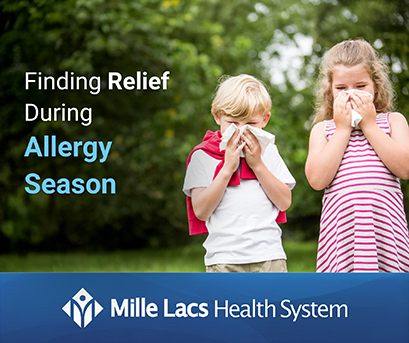
As warmer weather arrives, many people look forward to spending more time outdoors. Unfortunately, spring and summer also bring pollen, one of the most common triggers of seasonal allergies.
Seasonal allergies are common. According to the Centers for Disease Control and Prevention, about one in four adults and one in five children in the United States have a seasonal allergy. Symptoms often include sneezing, a runny or stuffy nose, watery eyes, itching, and coughing.
Seasonal allergens are most often caused by pollens from trees, grasses, and weeds. Other allergens can affect people year-round and may be caused by dust mites, mold spores, or animal dander. Over time, people can become more sensitive to allergens, meaning it may take less exposure to trigger symptoms.
When someone with allergies encounters an allergen, the body's immune system releases histamine. Histamine helps the body respond to threats, but it can also lead to increased mucus production, sneezing, congestion, itchy eyes, and other familiar allergy symptoms.
According to Nicholas Booker, DO, Family Medicine Provider at Mille Lacs Health System, one symptom people may not immediately connect to allergies is a persistent cough. Excess mucus can drain down the back of the throat, causing what is known as post-nasal drip, which is one of the most common causes of cough in adults.
Fortunately, several treatment options can help manage symptoms. Nasal steroid sprays such as Flonase (fluticasone) are often recommended as a first-line treatment.
"Nasal steroid sprays like Flonase can be very effective when used correctly," said Dr. Booker. "Aim the spray toward the outside wall of the nostril rather than the center of the nose. If you can taste the medication, you're probably not using it correctly."
Dr. Booker recommends using the opposite hand for each nostril - using the right hand to spray the left nostril and the left hand to spray the right nostril. This helps angle the medication toward the inflamed tissues where it can work most effectively.
If symptoms continue despite using a nasal spray, over-the-counter antihistamines such as cetirizine (Zyrtec) or loratadine (Claritin) may provide additional relief. Generic versions are equally effective for most people. Dr. Booker notes that medications such as diphenhydramine (Benadryl) can cause drowsiness and may be less suitable for older adults.
In addition to medication, reducing exposure to allergens can help. Checking local pollen forecasts, keeping windows closed during high-pollen days, showering after spending time outdoors, and changing clothes after yard work can all help reduce pollen exposure.
Individuals should consider seeing a health care provider if symptoms do not improve with treatment, if they develop a fever above 100.4 degrees, experience wheezing or shortness of breath, or if symptoms are causing them to miss work, school, or other activities.
With the right combination of prevention and treatment, most people can successfully manage seasonal allergies and continue enjoying the outdoors throughout the warmer months.