
-

- Find A Provider
-
Services
- Addiction Recovery
- Audiology
- Behavioral Health
- Cardiac Rehabilitation
- Cardiology
- Chiropractic Care
- Colon Cancer Screening
- Dermatology Services
- Diabetes Education
- ER & Urgent Care
- Family Medicine
- Home Care
- Hospice
- Infusion Therapy
- Internal Medicine
- Laboratory
- Long Term Care Facility
- Men's Health
- Nutrition Services
- Orthopedics
- Pain Management
- Podiatry
- Radiology/Diagnostic Imaging
- Rehabilitation Services
- Respiratory Care
- Senior Care Unit
- Sleep Medicine
- Surgery
- Swing Bed/Transitional Care
- Urology
- Women's Health
- Patients & Visitors
- Facilities & Pharmacy
- About Us
-

Recognizing the Signs of Sleep Apnea
July 15, 2026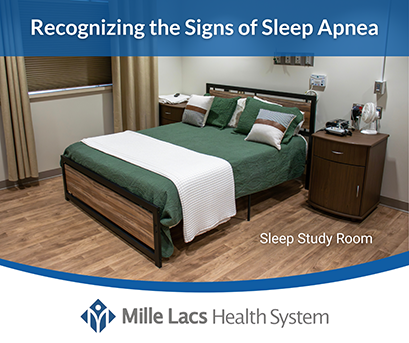
Getting a good night's sleep is essential for overall health, but for many people, restful sleep can be interrupted by an undiagnosed sleep disorder. According to the National Sleep Foundation, more than 50 million Americans are estimated to have obstructive sleep apnea (OSA), with approximately 80% remaining undiagnosed. Left untreated, OSA can have a significant impact on both daily life and long-term health.
Sleep apnea occurs when the muscles in the throat relax during sleep, causing the airway to narrow or close. These pauses in breathing can occur many times throughout the night, disrupting sleep and reducing oxygen levels. As a result, the body is unable to achieve the restorative sleep it needs.
Common signs of sleep apnea include loud snoring, excessive daytime sleepiness, morning headaches, difficulty concentrating, and witnessed pauses in breathing during sleep. Some individuals may also become unusually sleepy during conversations or while driving. Because these symptoms often develop gradually, many people do not realize they may have a sleep disorder.
Untreated sleep apnea can affect more than just sleep quality. It can increase the risk of high blood pressure, heart disease, stroke, and complications related to diabetes. Daytime fatigue caused by untreated sleep apnea can also increase the risk of motor vehicle and workplace accidents.
Mille Lacs Health System offers both home sleep testing and on-site sleep studies at its Onamia campus for patients whose healthcare provider recommends further evaluation. Patients receiving on-site sleep studies are cared for in one of two dedicated sleep study rooms designed to provide a comfortable setting for overnight testing. Home sleep tests allow patients to complete the study in the comfort of their own home, while on-site sleep studies provide more comprehensive monitoring when needed. After the study is completed, a board-certified sleep physician interprets the results, and the patient's primary care provider reviews the findings and discusses appropriate treatment options. Depending on the diagnosis, treatment may include positive airway pressure therapy, such as CPAP or BiPAP, or an oral appliance recommended by a dentist.
Anyone experiencing ongoing daytime sleepiness, loud snoring, or other symptoms of sleep apnea should talk with their healthcare provider about whether a sleep study may be appropriate. Early diagnosis and treatment can improve sleep quality, support overall health, and help reduce the risk of serious long-term health complications.