
-

- Find A Provider
-
Services
- Addiction Recovery
- Audiology
- Behavioral Health
- Cardiac Rehabilitation
- Cardiology
- Chiropractic Care
- Colon Cancer Screening
- Dermatology Services
- Diabetes Education
- ER & Urgent Care
- Eye Care
- Family Medicine
- Home Care
- Hospice
- Infusion Therapy
- Internal Medicine
- Laboratory
- Long Term Care Facility
- Men's Health
- Nutrition Services
- Orthopedics
- Pain Management
- Podiatry
- Radiology/Diagnostic Imaging
- Rehabilitation Services
- Respiratory Care
- Senior Care Unit
- Sleep Medicine
- Surgery
- Swing Bed/Transitional Care
- Urology
- Women's Health
- Patients & Visitors
- Facilities & Pharmacy
- About Us
-

Helping Your Child Navigate Back-to-School Emotions
August 19, 2026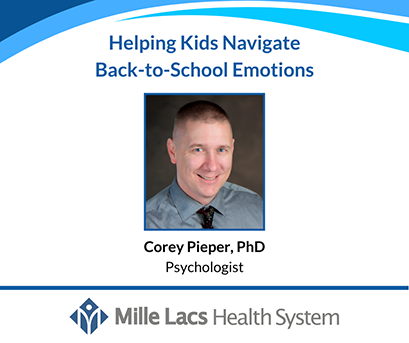
As the new school year approaches, children and teens often experience a mix of emotions. They may be excited to see friends and begin a new year while also feeling nervous about new teachers, higher expectations, changing friendships, or returning to busy routines.
These emotions aren't limited to young children. Younger children may become clingy or emotional, while teens are more likely to become quiet, irritable, or complain of headaches or stomachaches. Recognizing those changes can help parents start supportive conversations.
The good news is that these emotions are normal. Parents can't eliminate every worry, but they can help their children build the confidence and skills to work through them.
Start talking about the new school year before the first day arrives. Instead of asking, "Are you nervous?" try open-ended questions such as:
- What are you most looking forward to this year?
- Is there anything you're a little worried about?
Sometimes children don't need immediate solutions - they simply need to know someone is listening.
A child who says they don't want to go back to school may actually be worried about making a sports team, keeping up with schoolwork, fitting in with classmates, or navigating a friendship.
Simple responses like, "Tell me more about that," or "What makes that feel difficult?" can help children open up and feel understood.
It's tempting to reassure children by saying, "You'll be fine," or "Don't worry about it." While well-intentioned, those responses can sometimes make children feel like their emotions aren't being heard.
Instead, try saying, "I understand why that feels overwhelming," or "A lot of kids feel that way before school starts."
Acknowledging a child's emotions doesn't increase their worries - it helps them feel supported and understood.
Children often take emotional cues from the adults around them. A calm, confident approach from parents can help make the transition back to school easier.
“Focus on the positive things children can look forward to, like seeing friends or enjoying fun classes,” says Corey Pieper, PhD, a psychologist at Mille Lacs Health System. “Children pick up on cues from the adults around them, so talk positively about school and build simple, consistent routines at home, including a steady bedtime, as sleep is important to overall mental health. For younger children, keep goodbyes short on the first morning. Lingering won’t help and can make the transition more difficult.”
Some worries can't be solved ahead of time, but children often feel more confident when they focus on the things they can control.
Help them think about steps they can take, such as:
- Getting enough sleep.
- Packing their backpack the night before.
- Being kind to classmates.
- Asking questions if they need help.
- Following their usual morning and bedtime routines.
- Doing their best, even if everything isn't perfect.
Focusing on small, manageable actions can help children feel more prepared and less overwhelmed.
For most children, back-to-school emotions fade as routines become familiar and confidence grows.
If worries continue beyond the first few weeks of school or begin interfering with sleep, friendships, family life, or school attendance, talk with your child's healthcare provider or a mental health professional. Early support can make a meaningful difference.
To schedule an appointment with a Mille Lacs Health System provider, call 320-532-3154.
Every child experiences back-to-school emotions differently. By creating opportunities for conversation, listening with empathy, and offering steady encouragement, parents can help children and teens develop confidence that will serve them well throughout the school year - and beyond.